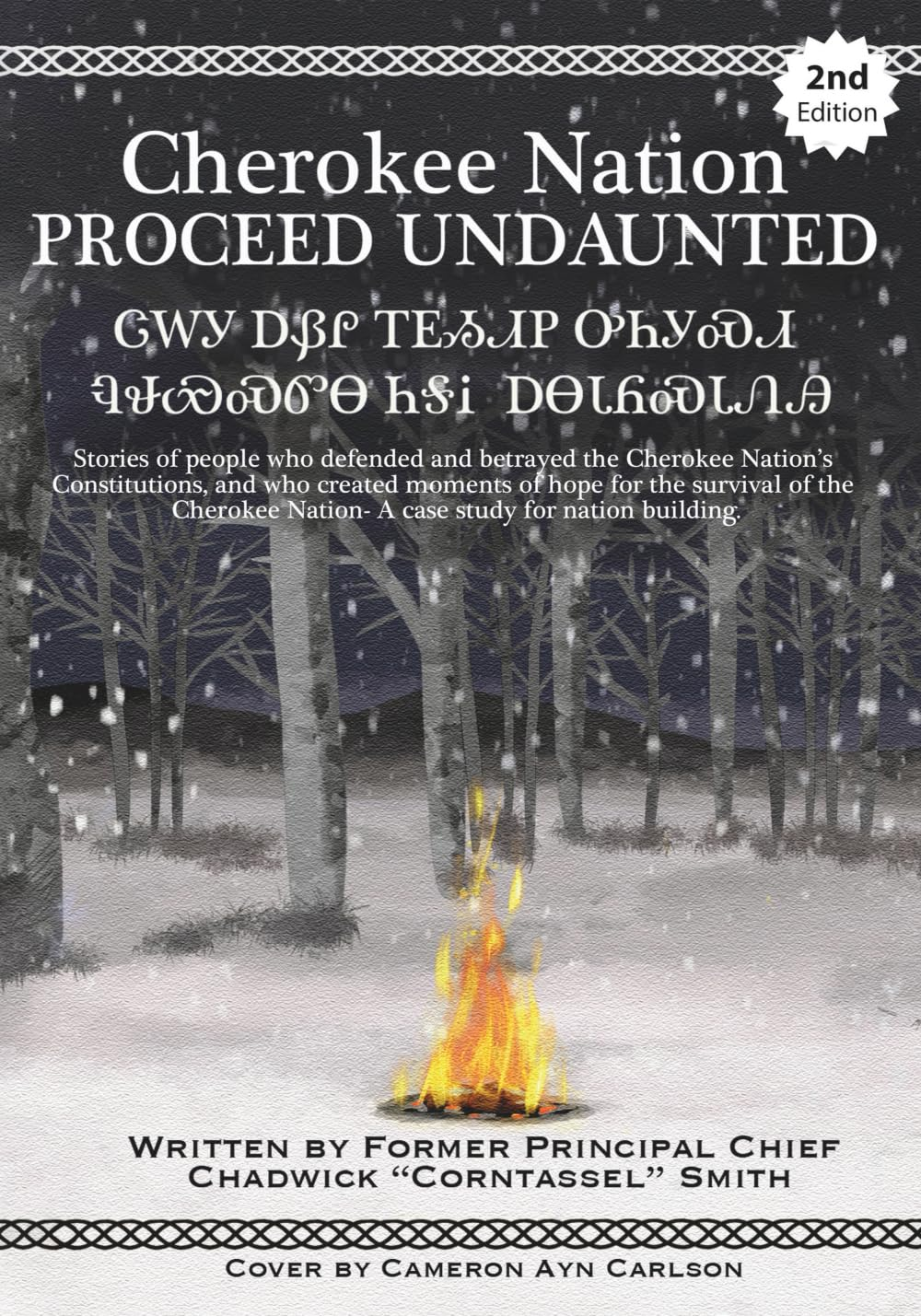
The Cherokee Nation has long fought for its right to govern itself, yet U.S. federal law continues to shape its legal system. The question remains: how much control does the U.S. government still exert over Cherokee legal affairs? As Chadwick “Corntassel” Smith outlines in Cherokee Nation: Proceed Undaunted, jurisdictional conflicts remain one of the greatest threats to the Nation’s sovereignty.
A Legacy of Federal Overreach
The Cherokee Nation’s legal system is built on its own constitutional framework, yet federal intervention has been a persistent issue since the 19th century. Smith details how the U.S. Supreme Court cases Cherokee Nation v. Georgia (1831) and Worcester v. Georgia (1832) defined the Nation as a “domestic dependent nation,” creating a legal precedent where tribal sovereignty is constantly in question.
In the modern era, federal laws such as the Major Crimes Act (1885) and the Indian Civil Rights Act (1968) have placed limitations on tribal courts. These laws dictate what cases the Cherokee legal system can handle, often shifting control to federal courts. Smith argues that such legal restrictions weaken the Cherokee Nation’s ability to fully govern its own people.
Jurisdictional Conflicts: Who Has Authority?
One of the most recent and significant legal battles affecting Cherokee sovereignty was the McGirt v. Oklahoma (2020) decision. As Smith explains, this ruling reaffirmed that much of eastern Oklahoma remains legally recognized as tribal land, meaning that crimes involving Native citizens should fall under tribal or federal jurisdiction rather than state control. However, Oklahoma officials have continuously pushed back, attempting to assert authority over Cherokee legal matters.
The Fight for Legal Independence
While the Cherokee Nation has made progress in reclaiming its legal sovereignty, Smith warns that external interference remains a threat. Federal oversight of tribal courts, state attempts to override Cherokee legal authority, and internal political struggles have all contributed to ongoing jurisdictional challenges.
To fully secure its legal independence, the Cherokee Nation must continue fighting for stronger jurisdictional protections. Smith calls for legislative action to reinforce tribal authority, greater transparency in legal decisions, and the removal of federal restrictions that limit the Nation’s ability to govern itself.
The Cherokee legal system stands at a crossroads. If sovereignty is to be preserved, the Nation must resist external control and ensure that its courts remain free from both federal and political manipulation.
AVALABILITY : https://www.amazon.com/dp/B0FN47D586/