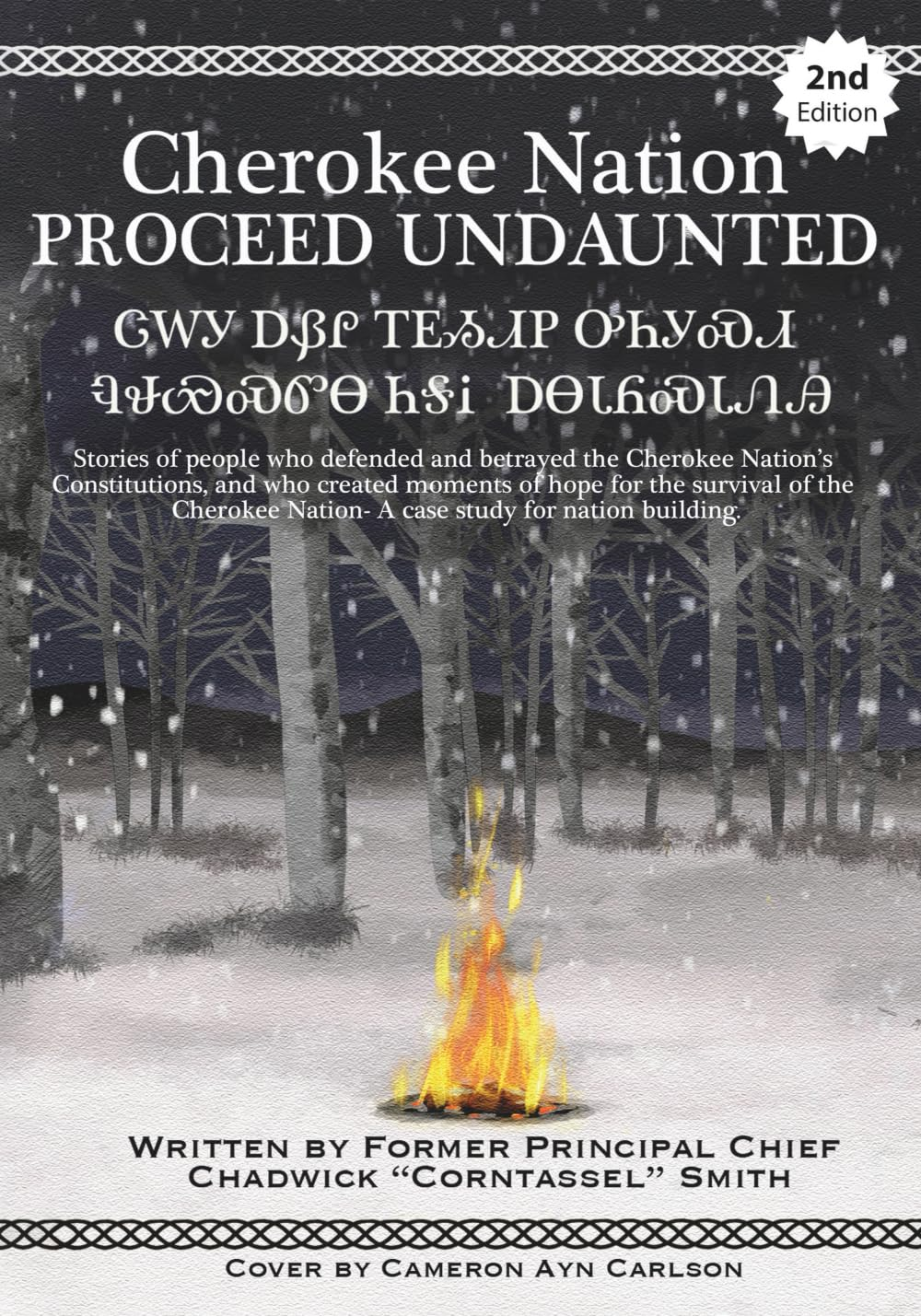
Education is one of the most powerful tools for preserving sovereignty and ensuring that future generations understand their rights, history, and governance. But how well do Cherokee Nation schools teach about the Nation’s constitutional history, governance struggles, and legal rights? As Chadwick “Corntassel” Smith explores in Cherokee Nation: Proceed Undaunted, the Cherokee Nation has a complex legal and political history—one that is often overlooked, even in its own schools.
The Importance of Teaching Cherokee Constitutional History
The Cherokee Nation has one of the most well-documented constitutional histories among Indigenous nations, dating back to the 1827 Constitution. This document established the Cherokee Nation as a self-governing entity, adopting elements of U.S. governance while maintaining traditional Cherokee values. Later constitutions, such as those from 1839, 1975, and 1999, further defined the Nation’s political structure.
Yet, as Smith highlights, many Cherokee students receive only a brief overview of this constitutional history. While Cherokee schools include general lessons on the Trail of Tears and early Cherokee governance, they often neglect deeper discussions on modern governance struggles, such as the constitutional crisis of 1995–1999, where political leaders undermined the Cherokee Supreme Court, or the 2021 controversy where the Supreme Court altered citizenship rules without a vote from the people.
Are Schools Addressing Legal Rights and Sovereignty?
One of the most critical aspects of Cherokee education should be informing students about their legal rights as citizens of a sovereign nation. Federal laws such as the Indian Civil Rights Act and Supreme Court rulings like McGirt v. Oklahoma (2020) have had a profound impact on Cherokee sovereignty. Yet, Smith argues that many young Cherokee citizens are unaware of these rulings and their implications.
Additionally, legal disputes over issues like land rights, taxation, and tribal jurisdiction remain ongoing. Smith emphasizes that if Cherokee students do not learn about these topics, they will be unprepared to defend their Nation’s sovereignty in the future.
What Needs to Change?
To ensure a well-rounded education, Smith calls for the inclusion of:
- Comprehensive Cherokee constitutional history in school curricula, including governance challenges and political disputes.
- Legal education programs that inform students of their rights as Cherokee citizens.
- Expanded Cherokee language and culture education to reinforce identity and historical understanding.
Education is the foundation of sovereignty. If Cherokee schools fail to teach the full truth about governance struggles and legal rights, future generations may be unprepared to defend their Nation’s autonomy. It is time for Cherokee education to reflect the depth and complexity of its own history.
AVALABILITY : https://www.amazon.com/dp/B0FN47D586/