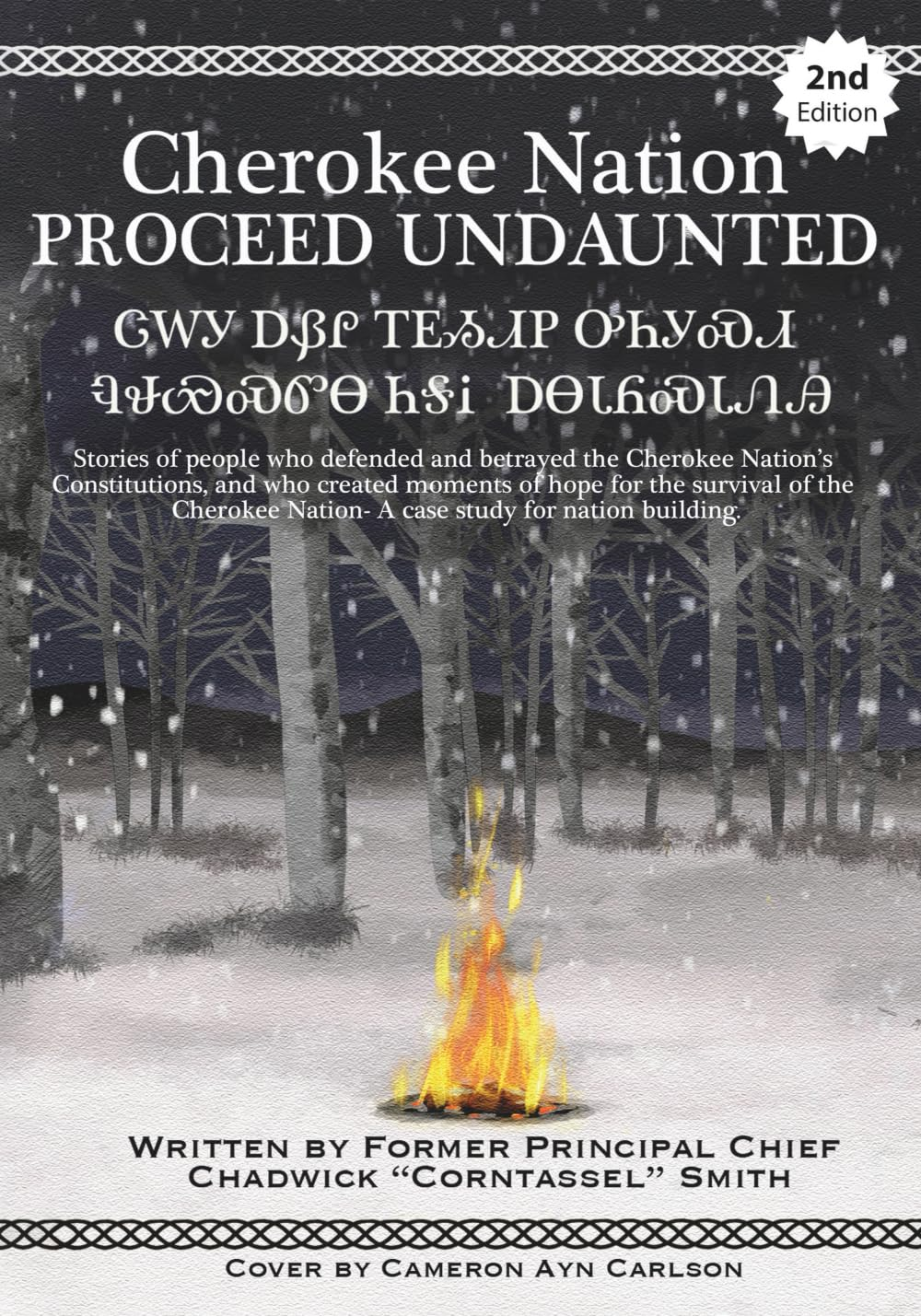
Who is Cherokee? This question has been at the heart of one of the most contentious debates in Cherokee Nation history. As Chadwick “Corntassel” Smith details in Cherokee Nation: Proceed Undaunted, the definition of Cherokee citizenship has shifted over time, influenced by legal rulings, political agendas, and cultural identity. Should Cherokee citizenship be determined by “blood quantum,” family lineage, or community involvement?
The Historical Basis of Citizenship
Historically, Cherokee identity was defined by kinship and community, not blood percentage. Before European contact, membership in the Cherokee Nation was based on clan affiliation and participation in Cherokee society. This system was disrupted by federal policies that imposed racial classifications on Indigenous peoples.
The U.S. government introduced blood quantum requirements as a tool of assimilation and measure of financial competency., .
The 2007 Amendment and the 2021 Supreme Court Ruling
One of the most significant modern debates over Cherokee citizenship arose in 2007 when Cherokee voters passed an amendment requiring citizens to have “Cherokee blood.” This effectively removed Cherokee Freedmen (descendants of enslaved people within the Cherokee Nation) from tribal rolls.
However, as Smith details, in 2021, the Cherokee Nation Supreme Court unilaterally removed the phrase “by blood” from the Constitution, granting Freedmen citizenship. This ruling sparked outrage among many Cherokee citizens, who saw it as a direct violation of the democratic process. The decision ignored the will of the people, who had overwhelmingly approved the 2007 amendment.
Smith argues that the ruling set a dangerous precedent: if the Cherokee Supreme Court can overturn constitutional amendments without a vote, what stops them from doing so in the future? The decision also reignited debates about whether citizenship should be determined by ancestry, legal precedent, or cultural participation.
The Case for Blood Quantum
Supporters of blood quantum argue that Cherokee citizenship should remain exclusive to those with documented Cherokee ancestry. They believe that removing blood requirements weakens Cherokee identity and could eventually lead to the Nation being overrun by individuals with no true connection to Cherokee history or culture.
Smith warns that if citizenship is not clearly defined, external political forces could push for looser criteria, leading to a dilution of Cherokee sovereignty. For example, if Cherokee citizenship is based solely on legal rulings rather than blood lineage, the federal government may have more influence in determining tribal membership.
.
The Future of Cherokee Citizenship
As Smith discusses in Cherokee Nation: Proceed Undaunted, the debate over Cherokee citizenship is far from settled. What is clear, however, is that any decision regarding citizenship criteria must come from the Cherokee people, not external pressures or unilateral court rulings.
Smith argues that the Nation must carefully consider:
- The long-term impact of blood lineage policies and whether they strengthen or weaken sovereignty.
- The role of constitutional integrity, ensuring that citizenship laws reflect the will of the people.
- The importance of cultural preservation, protecting Cherokee identity beyond legal definitions.
At its core, this debate is not just about who qualifies as a Cherokee citizen—it is about the future of the Cherokee Nation itself. If sovereignty is to be preserved, citizenship must be defined in a way that honors Cherokee history, respects the democratic process, and protects the integrity of the Nation for generations to come.
AVALABILITY : https://www.amazon.com/dp/B0FN47D586/